

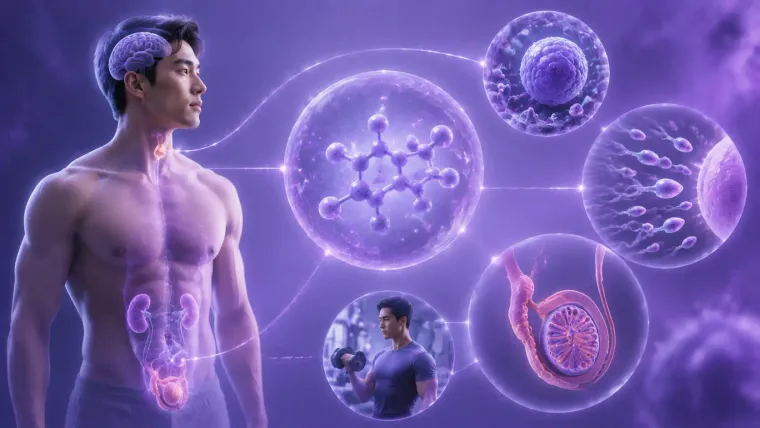
The male reproductive system is regulated by a network of hormonal communication known as the HPG (Hypothalamic-Pituitary-Gonadal) axis — a three-tiered system connecting the lower part of the brain (hypothalamus), the gland at the base of the brain (pituitary gland), and the testicles to regulate hormone and sperm production. Disruptions in the balance of these hormones are one of the main causes of abnormal sperm production, ranging from decreased concentration to azoospermia (the complete absence of sperm in ejaculated fluid). Understanding the role of each hormone helps doctors accurately diagnose and determine the appropriate treatment pathway.
Mechanisms of the HPG Axis and Main Hormone Functions
The process of sperm formation inside the testicles is controlled from the brain through the periodic release of the following hormones:
1. FSH (Follicle-Stimulating Hormone)
Produced by the pituitary gland in the brain, FSH works directly on Sertoli cells — specialized cells inside the testicles that act as “nurses” for sperm cells, providing nutrition and support so young sperm can develop into mature sperm. Sertoli cells are located within the seminiferous tubules (small ducts inside the testicles where sperm are produced and matured). Normal FSH levels are crucial for initiating and maintaining sperm production.
2. LH (Luteinizing Hormone)
Just like FSH, LH is produced by the pituitary gland. LH acts as the primary signal for Leydig cells — specialized cells inside the testicles tasked with producing testosterone.
3. Testosterone
This primary androgen hormone is responsible for male secondary sexual characteristics, libido, and erectile function. However, its most important role is intratesticular testosterone levels — the testosterone levels inside the testicular tissue itself, which reach 100 times higher than testosterone levels in the blood. These high levels must be present so that round spermatids (immature young sperm cells) can develop into mature sperm with a perfect tail and head.
When is Hormonal Evaluation Necessary?
Based on clinical guidelines from the American Urological Association (AUA) and the American Society for Reproductive Medicine (ASRM), male hormonal evaluation is recommended under the following conditions:
- Very low sperm concentration (less than 10 million/mL) or azoospermia.
- Complaints of significant erectile dysfunction or decreased sexual desire (libido).
- Physical findings of testicular atrophy — a condition where the testicles shrink in size and feel softer than normal, which may indicate impaired testicular function.
- Other signs of hormonal disruption, such as gynecomastia — the enlargement of breast tissue in men due to an imbalance of estrogen and testosterone hormones.
Interpreting Hormone Results: Differentiating Obstructive vs Non-Obstructive
Testing the levels of FSH, LH, and total testosterone greatly helps doctors distinguish between the two main types of azoospermia:
1. Obstructive Azoospermia (Duct Blockage)
In this condition, the testicles are actually working normally to produce sperm. Because production is unimpaired, the hormonal feedback mechanism to the brain is maintained. Test results generally show FSH, LH, and testosterone levels within normal limits, although no sperm comes out due to a physical blockage in the reproductive tract.
2. Non-Obstructive Azoospermia (Production Failure / NOA)
In NOA, the testicular tissue experiences failure in the sperm formation process. The brain responds to this failure by producing more FSH and LH to urge the testicles to work. As a result, the hormonal profile of NOA patients is characterized by elevated FSH and LH levels, often accompanied by low or low-normal testosterone levels.
Hormonal Therapy Approaches for Oligoasthenoteratozoospermia (OAT)
OAT (Oligoasthenoteratozoospermia) — a condition where sperm count, movement, and shape are all simultaneously below normal limits due to hormonal imbalance, can benefit from hormonal therapy to increase testosterone levels inside the testicular tissue:
- SERMs (Selective Estrogen Receptor Modulators): Medications that work by blocking the effects of estrogen in the brain, thereby stimulating the body to naturally produce more FSH and LH. An example is Clomiphene Citrate — a drug that stimulates the brain to produce more sperm-stimulating hormones.
- Aromatase Inhibitors (AIs): Medications that prevent testosterone from turning into estrogen within the body’s fat tissue. Used when the ratio of testosterone to estradiol is disrupted — meaning estrogen levels are too high compared to testosterone in the male body. Examples include Anastrozole or Letrozole.
- Gonadotropin Injections (hCG/rFSH): External hormone injections — hCG (human Chorionic Gonadotropin) stimulates Leydig cells to produce testosterone, while rFSH (recombinant FSH) stimulates Sertoli cells to support sperm formation. Administered primarily in cases of hypogonadotropic hypogonadism — a condition where the brain does not produce enough hormone signals to the testicles, thus disrupting testosterone and sperm production.
References
• Jungwirth, A., et al. (2022). European Association of Urology Guidelines on Male Infertility. European Urology.
• Santi, D., et al. (2020). Follicle-Stimulating Hormone Treatment for Male Infertility: A Systematic Review and Meta-Analysis. Human Reproduction Update.
• Spermatogenesis Hormonal Regulation Working Group. (2024). Targeted Endocrine Therapy in Male Oligoasthenoteratozoospermia. Journal of Clinical Endocrinology.
Disclaimer: This information is for educational purposes and does not replace a doctor’s evaluation. Diagnostic and therapeutic decisions should be tailored to your and your partner’s examination results.