

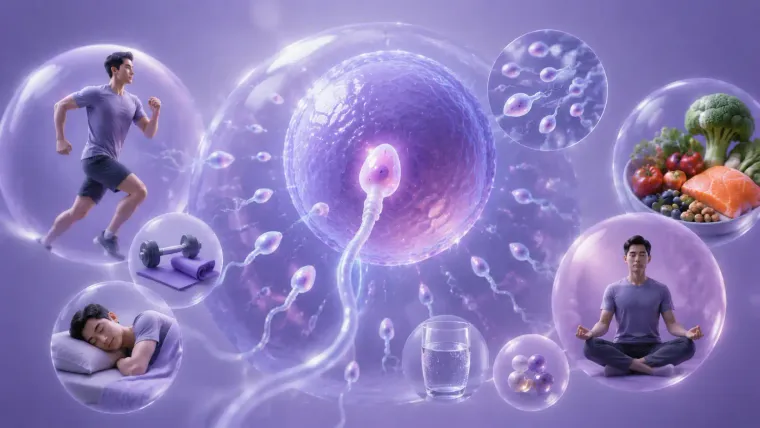
Healthy sperm is one of the main keys to the success of a pregnancy program for couples. However, keeping sperm quality optimal requires a comprehensive approach to lifestyle and physical condition. This article reviews scientifically proven steps to help improve sperm quality through specific diets, lifestyles, and supplements.
Basic Parameters of Healthy Sperm According to Global Standards
Before making lifestyle changes, it is important for men to understand the measures of healthy sperm quality based on World Health Organization (WHO) standards:
- Semen Volume: Minimum 1.4 mL per ejaculate.
- Sperm Concentration: Minimum 15 million cells per milliliter of semen.
- Motility (Movement): Minimum 40% actively moving, with at least 30% showing progressive motility (ability to swim straight forward).
- Morphology (Shape): Minimum 4% have a normal structure (perfect head, neck, and tail).
- Liquefaction: The process where thick semen fluid naturally liquefies within 15–20 minutes after ejaculation — necessary so that sperm can move freely.
Nutritional Interventions and Specific Micro-Nutrient Consumption
1. The Role of Antioxidants in Protecting Sperm
Sperm cells are highly vulnerable to damage from free radicals — unstable molecules generated from the body’s metabolic processes or environmental exposure, which can damage cells if their numbers are excessive. This damage can impair the sperm cell membrane and trigger DNA fragmentation (damage to the genetic material inside the sperm that can hinder fertilization or embryo development). Consumption of vitamin C-rich fruits such as oranges, strawberries, kiwis, and guavas helps neutralize these free radicals. In addition, lycopene — a natural red pigment found in watermelons and tomatoes that acts as a strong antioxidant — has been shown to protect the integrity of sperm cells from damage.
2. Coenzyme Q10 (CoQ10) and Zinc
CoQ10 is a natural compound that plays an important role in energy production within the mitochondria (the part of the cell that acts as a power plant) of sperm. CoQ10 supplements have been shown to increase sperm movement energy, making it a popular additional choice in male fertility programs. Meanwhile, Zinc intake works to support overall sperm production numbers.
3. Folic Acid (Vitamin B9) for Men
Although folic acid is better known for female pregnancy preparation, this nutrient is also important for men. Folic acid supports the formation of stable sperm DNA during the sperm production process (spermatogenesis). Adequate folic acid supplementation lowers the risk of producing abnormal sperm that experience aneuploidy — a condition where sperm have an abnormal number of chromosomes (excess or deficit), which can affect embryo development.
Physical Modifications and Testicular Temperature Management
Regular Exercise and Weight Control
Moderate-intensity exercise two to three times a week can stimulate the natural production of the hormone testosterone, which directly supports the improvement of sperm quality. However, excessive strenuous exercise can actually disrupt reproductive hormone balance (homeostasis — the body’s ability to keep internal conditions stable, including hormone levels) and decrease semen quality. In addition, weight loss in overweight men is clinically proven to improve sperm volume, concentration, and motility.
Avoiding Excessive Heat to the Testicles
The optimal temperature for the sperm production process (spermatogenesis) inside the testicles is about 1–2 degrees Celsius below core body temperature (the normal temperature inside the body, around 37°C). Continuous use of tight pants can press the testicles toward the body, increasing the scrotal temperature, and gradually inhibiting the development of young sperm cells. This condition is called scrotal hyperthermia — an increase in temperature in the testicular area that exceeds the optimal limit for sperm production.
Conclusion
Improving sperm quality naturally is not an instant process — the biological cycle of sperm formation takes about 74 days. By combining antioxidant nutrients, regular exercise, supplementation like folic acid and CoQ10, and avoiding oxidative stress (a condition where the number of free radicals in the body exceeds the body’s ability to neutralize them, thus damaging body cells including sperm), sperm quality can be significantly optimized.
References
• World Health Organization. (2021). WHO Laboratory Manual for the Examination and Processing of Human Semen, 6th Edition. Geneva: World Health Organization.
• Dunlap, B., et al. (2020). The Role of Folate and Zinc Supplementation on Male Fertility Parameters. Journal of Urology and Andrology.
• Amelia, F. (2024). Circadian Rhythms, Sleep Quality, and Male Reproductive Endocrinology. Indonesian Journal of Fertility.
Disclaimer: This information is for educational purposes and does not replace a doctor’s evaluation. Diagnostic and therapeutic decisions should be tailored to your and your partner’s examination results.