

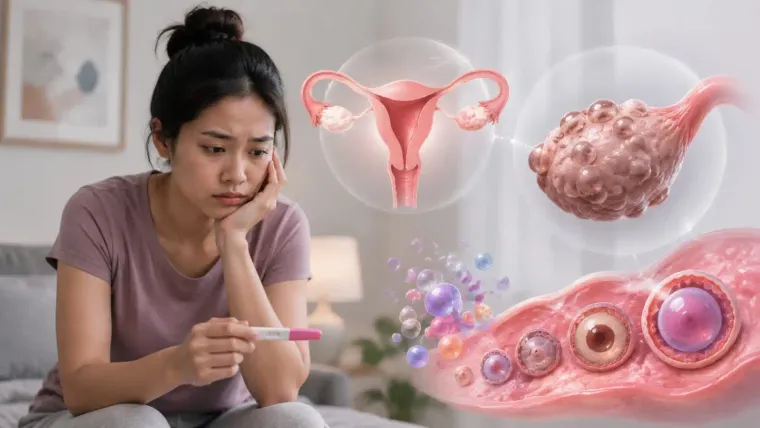
PCOS (Polycystic Ovary Syndrome) is a common hormonal disorder in women of reproductive age, affecting about 5–10% of women in their reproductive years. This condition is characterized by three main features: irregular menstrual cycles due to anovulation (the failure of the ovaries to release an egg regularly), numerous small follicles (sacs containing immature eggs) in the ovaries, and high levels of androgen hormones (hormones that are typically more dominant in men, such as testosterone) in the body.
Because ovulation is disrupted, eggs are not released routinely, making natural pregnancy difficult. This condition is often accompanied by insulin resistance — a state where the body does not respond well to insulin, causing blood sugar levels to tend to be higher than normal, especially in overweight women.
How Does PCOS Affect Fertility?
- PCOS is one of the most frequently found causes of female infertility. Because eggs are not released regularly, the chances of getting pregnant naturally decrease, and the risk of miscarriage increases.
- Even so, PCOS is not a condition without a solution. With proper treatment, many women with PCOS successfully become pregnant — whether naturally or through medical programs.
Signs and Symptoms
- Irregular periods (fewer than 8 times a year), excessive hair growth (hirsutism), acne, and weight gain.
- On an ultrasound, many small follicles appear in the ovaries. Hormone tests such as LH (Luteinizing Hormone — a hormone that triggers egg release), FSH (Follicle Stimulating Hormone — a hormone that stimulates follicle maturation in the ovaries), testosterone, and blood sugar help establish a PCOS diagnosis.
Managing PCOS for Pregnancy
- The first step is lifestyle changes: losing weight, a healthy diet, and regular exercise can help restore the menstrual cycle and trigger ovulation again.
- If medication is needed, doctors can prescribe clomiphene citrate or letrozole — drugs that stimulate the ovaries to release an egg. Metformin is sometimes used to improve insulin resistance and support more regular menstrual cycles.
- With the right approach, many women with PCOS eventually succeed in getting pregnant, either with or without the help of medication.
Medical Programs If Needed
- If initial therapies are unsuccessful, the next step can be artificial insemination (IUI — a procedure of inserting sperm directly into the uterus at the time of ovulation to increase the chances of fertilization) or IVF & ICSI programs.
- IVF & ICSI are usually recommended if there are additional factors such as blocked fallopian tubes (the ducts connecting the ovaries to the uterus cannot be passed through by eggs or sperm), or if previous therapies have not yielded results.
- Momart IVF has experience treating patients with PCOS and provides fertility programs tailored to the hormonal conditions and needs of each couple, including for couples from Indonesia.
Disclaimer: This information is for educational purposes and does not replace a doctor’s evaluation. Diagnosis and therapy decisions must be tailored to the examination results of you and your partner.