

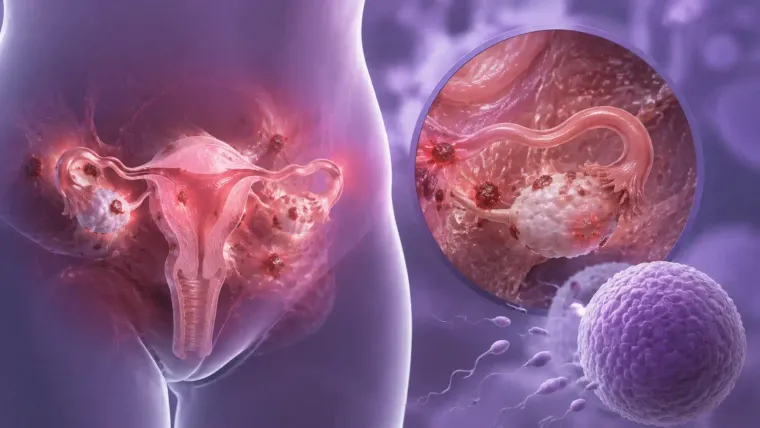
Endometriosis is a condition where tissue similar to the lining of the uterus (endometrium — the inner lining of the uterine wall that normally sheds during menstruation) grows outside the uterus. This tissue can be found on the ovaries, fallopian tubes (the ducts connecting the ovaries to the uterus and serving as the pathway for the egg), or other pelvic organs.
It is estimated that 30–50% of women experiencing difficulty getting pregnant also have endometriosis. Many only discover this condition while investigating the causes of infertility, as not all sufferers experience clear symptoms.
Impact on Fertility
- Endometriosis can cause adhesions — tissue scarring due to inflammation that makes pelvic organs stick together. This condition complicates the release of the egg (ovum) and can impair the function of the fallopian tubes, thereby obstructing the egg’s journey to the uterus.
- The American Society for Reproductive Medicine (ASRM) reports that women with infertility are 6–8 times more likely to have endometriosis compared to fertile women. Although the cause-and-effect relationship is not always direct, endometriosis remains one of the factors that need to be evaluated early on.
- The degree of endometriosis’s impact on fertility varies — depending on how extensively the tissue has grown, its location, and whether there are significant complications such as cysts or adhesions.
Diagnosis
- A definitive diagnosis of endometriosis usually requires a laparoscopy (a minimally invasive surgical procedure — the doctor inserts a small camera through a tiny incision in the abdomen to directly view abnormal tissue inside the pelvic cavity).
- Ultrasounds can detect endometriotic cysts (endometriomas — sacs containing old blood formed in the ovaries due to endometriosis), but mild endometriosis is often only visible when a laparoscopy is performed.
Treatment
- The primary goal of treatment is to restore pelvic anatomy (the normal structure and position of organs within the pelvic cavity). For moderate to severe endometriosis — that which has caused extensive adhesions or large cysts — laparoscopy to remove the endometriotic tissue can improve the chances of pregnancy.
- Hormonal therapies such as hormonal contraceptives or GnRH agonists (medications that suppress reproductive hormones to temporarily halt the growth of endometriosis) are effective in reducing pain symptoms, but they do not increase the chances of pregnancy and actually delay fertility programs while in use.
- If pregnancy is desired sooner, IVF & ICSI are often the best choices — especially when other factors such as age or ovarian reserve also need to be considered.
- Momart IVF has experience treating patients with endometriosis and designing fertility programs tailored to each patient’s condition, including for couples from Indonesia.
Disclaimer: This information is for educational purposes and does not replace a doctor’s evaluation. Diagnosis and therapy decisions must be tailored to the examination results of you and your partner.