

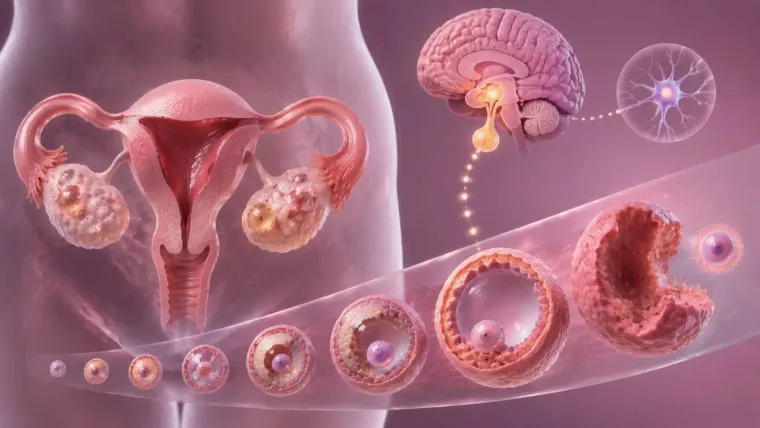
Infertility is defined by the WHO as the failure to achieve pregnancy after 12 months or more of regular unprotected intercourse. The causes of female infertility vary widely, ranging from ovulation disorders, fallopian tube damage, and uterine abnormalities to hormonal imbalances.
Main Causes of Female Infertility
- Ovulation Disorders: Problems with the monthly release of an egg. The most common example is PCOS (Polycystic Ovary Syndrome — a hormonal disorder causing irregular menstrual cycles and numerous small follicles in the ovaries). Other conditions include primary ovarian insufficiency (a condition where the ovaries stop functioning normally before age 40) or pituitary hormone disorders (the gland in the brain that regulates reproductive hormone production).
- Fallopian Tube Damage: Blocked fallopian tubes due to infections such as chlamydia (a sexually transmitted infection that is often asymptomatic but can damage the reproductive tract) or pelvic inflammatory disease (an infection of the upper female reproductive organs that can cause scarring in the fallopian tubes), previous pelvic surgery, or inflammatory bowel disease. This blockage prevents the egg from meeting the sperm.
- Uterine Abnormalities: Endometriosis can cause adhesions (tissue scarring due to inflammation that makes pelvic organs stick together) in the pelvis. About 25–50% of women with infertility are found to have endometriosis. Uterine fibroids (benign tumors growing inside or on the wall of the uterus) or a congenital uterine septum (a partition inside the uterine cavity present from birth that can interfere with embryo implantation) can also affect fertility.
- Hormonal and Other Factors: Thyroid hormone disorders, high prolactin (a hormone normally produced during breastfeeding, but if too high outside of breastfeeding can disrupt ovulation), or autoimmune conditions (conditions where the immune system attacks the body’s own tissues, including reproductive organs). Age is also important — ovarian reserve declines significantly after about age 35. AMH (Anti-Mullerian Hormone — a hormone reflecting the number of eggs remaining in the ovaries) testing is often done to assess ovarian reserve.
Initial Examination
To determine the cause of infertility, a doctor may perform the following tests:
- Hormone Tests: Measurement of FSH (Follicle Stimulating Hormone — a hormone stimulating egg maturation), LH (Luteinizing Hormone — a hormone triggering egg release), estradiol (the primary estrogen hormone involved in the menstrual cycle), TSH (Thyroid Stimulating Hormone — a hormone regulating thyroid gland function), prolactin, and AMH to evaluate ovulation and ovarian reserve.
- Transvaginal Ultrasound: An ultrasound examination using a small device inserted into the vagina to get a clearer picture of the ovaries and uterus, including looking for follicles, cysts, fibroids, and signs of PCOS.
- Hysterosalpingography (HSG): A specialized X-ray examination where a contrast medium is injected into the uterus to see if the fallopian tubes are blocked or if there are abnormalities in the uterine cavity.
- Laparoscopy/Hysteroscopy: Minimally invasive surgical procedures — a laparoscopy directly views the condition of the pelvic cavity through a small camera in the abdomen, while a hysteroscopy views the inside of the uterus through a camera inserted via the vagina. Both can be used to confirm endometriosis or remove adhesions.
With complete examination results, the medical team can determine the most suitable fertility program steps for your condition.
Free HagiaMed Consultation — a free initial consultation with our specialists, at no cost and with no commitment.
Disclaimer: This information is for educational purposes and does not replace a doctor’s evaluation. Diagnosis and therapy decisions must be tailored to the examination results of you and your partner.